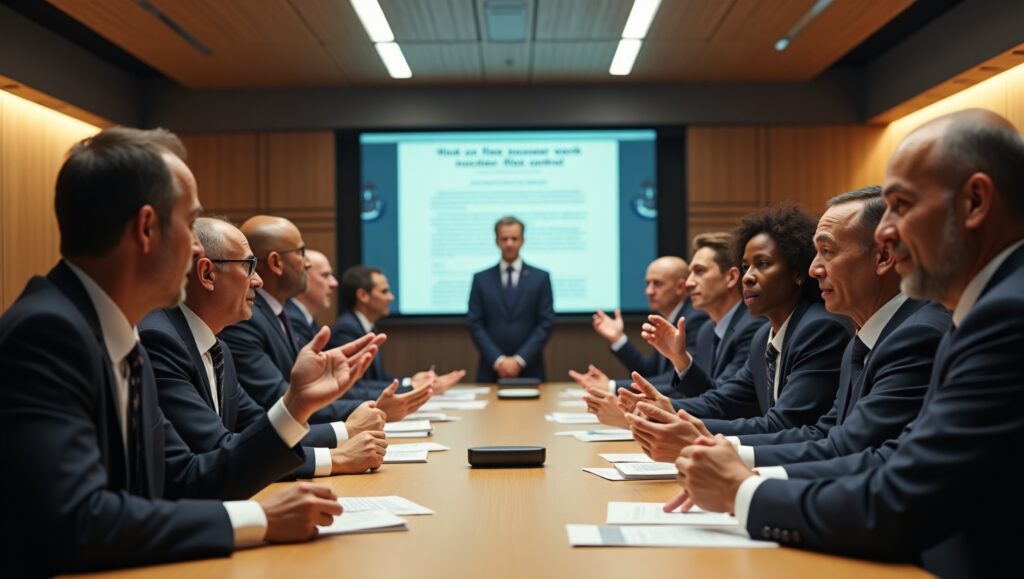
AI Nuclear Treaties: The Future of Arms Control in a Technological Age
Introduction
In the intricate web of international relations, nuclear treaties stand out as pivotal instruments for maintaining global peace and stability. These treaties have long been the bedrock of national security, ensuring the regulation and management of nuclear armaments. However, the landscape of arms control is evolving with the introduction of artificial intelligence (AI) as a transformative tool in the context of nuclear weapons. As traditional frameworks face obsolescence, AI emerges as a potential savior, reshaping the way nuclear treaties function and adapting to modern technological advancements.
Background
Nuclear treaties have historically played an indispensable role in arms control, with agreements like the Strategic Arms Reduction Treaty (START) and the Intermediate-Range Nuclear Forces Treaty (INF) being notable examples. These treaties have facilitated significant reductions in nuclear weapons, enhancing geopolitical stability. However, with the recent expiration of major agreements between nations such as the US and Russia, the efficacy of these traditional treaties is in jeopardy. This dilemma calls for innovative solutions to circumvent these limitations, paving the way for AI’s potential in nuclear surveillance and monitoring. AI technologies possess the capability to supplement or even replace some aspects of treaty verification, offering an advanced layer of oversight that previous methods cannot match.
Trend
The integration of AI surveillance into national security strategies is a burgeoning trend gaining traction among policymakers. Key innovations, such as satellite-based monitoring systems, harness AI’s power to analyze and interpret complex data timely and efficiently. This technological leap holds particular relevance to AI nuclear treaties, as it facilitates more precise monitoring of nuclear activities. As Matt Korda articulates, alternatives to traditional treaty structures are imperative—AI can potentially fill this critical void. The shift towards technology-driven verification methods signals a transformative era for arms control, one that may reshape international geopolitics (source).
Insight
Among the proposed advancements is a system known as ‘cooperative technical means.’ This approach envisions a network where satellites and AI-driven pattern recognition systems work in harmony to verify nuclear compliance remotely. However, implementing such a system is not without challenges. Data trust issues loom large, as nations grapple with the implications of sharing sensitive information that could be vulnerable to manipulation or misuse. Further complicating matters are the geopolitical implications of AI surveillance, raising questions about sovereignty and international cooperation. Experts like Igor Morić and Sara Al-Sayed highlight both the promise and the pitfalls of these technologies. As Morić notes, the success of these systems hinges on unprecedented levels of collaboration and transparency (source).
Forecast
Looking ahead, the future of AI in arms control seems promising yet uncertain. As international tensions fluctuate, the acceptance and development of AI nuclear treaties will likely evolve in unpredictable ways. For instance, the proliferation of AI technologies might lead some countries to embrace these systems out of necessity, while others may resist, fearing the erosion of national sovereignty. It is conceivable that as AI becomes more integral to arms control, the global community will undergo a paradigm shift, placing greater emphasis on technological solutions to ensure lasting peace and security.
Call to Action
As we stand on the precipice of a new era in arms control, the role of AI in shaping nuclear treaties cannot be understated. We invite readers to ponder: What are your thoughts on AI as a tool for nuclear arms control? Engage with this evolving narrative—share this article and delve deeper into the ongoing developments in AI and arms control. For further insights, explore the related discussions at Wired. Let us collectively contribute to a future where AI not only aids national security but also fosters a safer world for all.
By embracing the potential of AI in the realm of nuclear treaties, we edge closer to realizing a vision where technology serves as a custodian of global peace, balancing the scales of power in an ever-complex world.
