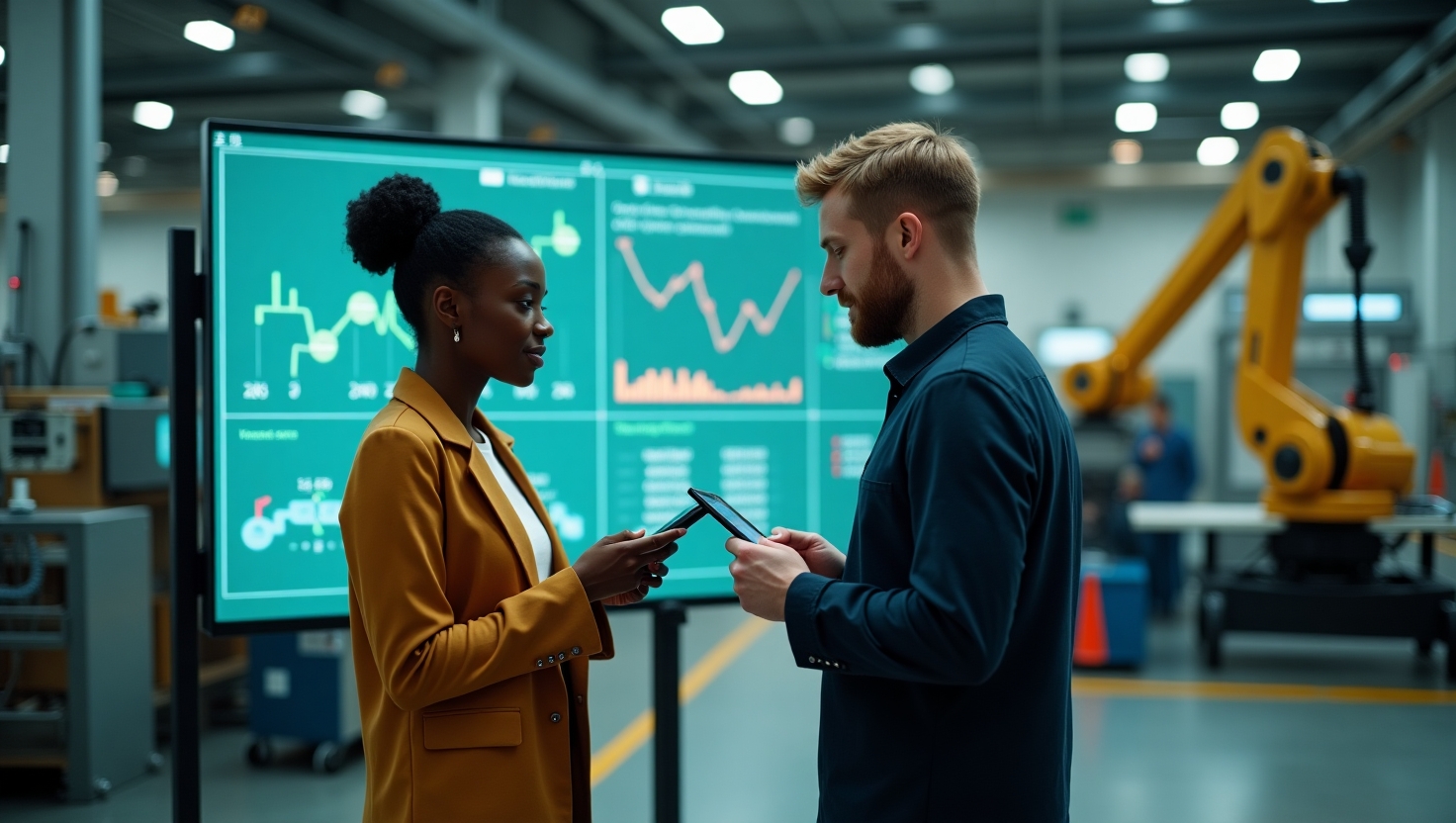
The Revolution of AI in Manufacturing: Transforming the Industry
Introduction
In today’s rapidly evolving industrial landscape, AI in Manufacturing stands as a pivotal force driving innovation and efficiency. As businesses strive to remain competitive, AI solutions are reshaping traditional manufacturing methods by introducing an era of unprecedented precision, speed, and adaptability. From factory floors to supply chains, AI is revolutionizing how goods are produced and distributed, ensuring that manufacturers can meet modern demands with agility and precision.
By integrating intelligent design into manufacturing processes, companies can harness the power of AI to streamline operations, enhance production optimization, and achieve significant gains in supply chain efficiency. As industries grow increasingly interconnected, understanding the impact of AI in manufacturing becomes crucial in navigating the future of production and logistics.
Background
The journey towards incorporating AI in manufacturing has its roots in the evolution of industry practices. Historically, traditional manufacturing relied heavily on manual labor and rudimentary machinery. However, the quest for increased productivity and reduced costs paved the way for automation, eventually leading to the integration of intelligent design and AI-driven processes.
Traditional manufacturing centered around linear workflows, often resulting in bottlenecks and inefficiencies. With AI, these processes are now viewed through the lens of production optimization. For example, AI can analyze data from multiple production stages to predict maintenance needs, reducing downtime and maintaining efficiency. Similarly, supply chain efficiency is enhanced by AI’s ability to forecast demand and manage logistics with pinpoint accuracy, ensuring that resources are optimally allocated and wastage minimized.
Current Trends in AI in Manufacturing
Across the globe, companies are embracing AI to transform their manufacturing operations. For instance, PepsiCo and Amazon are at the forefront, implementing cutting-edge solutions like digital twins. Digital twins allow manufacturers to create virtual replicas of their production environments, enabling them to simulate various scenarios, test changes without physical risks, and optimize operational processes.
PepsiCo’s use of digital twins, as highlighted in a recent article, showcases how this technology reduces the time needed to validate changes—from weeks or months to mere days—directly impacting the decision-making cycle and improving throughput. These applications not only drive efficiency but also empower companies to make more informed decisions based on real-time data.
Insights from Industry Leaders
Industry leaders offer valuable insights into the integration of AI in manufacturing workflows. Through documented case studies and expert opinions, it is clear that the incorporation of AI has profound implications on operational efficiency and strategy.
Consider PepsiCo’s strategic deployment of AI, which underscores its commitment to technological advancements in factory operations. As mentioned in sources like Artificial Intelligence News, the company’s adoption of AI enhances not only productivity but also operational fluidity and responsiveness.
One executive insight comes from Amazon’s experiences, often quoted for its visionary approach to AI in logistics. By leveraging AI for inventory management and logistics, Amazon illustrates how AI can transform traditional practices into highly responsive systems capable of adapting to dynamic market conditions.
Future Forecast of AI in Manufacturing
As the manufacturing industry continues to evolve, the future of AI presents a landscape rich with opportunities and innovations. Evolving AI solutions are expected to further bolster supply chain efficiency, streamlining production cycles and minimizing delays through advanced analytics and predictive modeling.
Looking forward, AI’s role in manufacturing will likely revolutionize traditional jobs, requiring a workforce adept in digital skill sets. This shift may lead to the creation of new roles focused on AI management and maintenance, ensuring that the benefits of AI’s precision and adaptability are maximized across all facets of production.
Industry forecasts predict that AI will not only optimize current practices but will also drive the creation of entirely new methodologies, enhancing the resiliency and flexibility of manufacturing systems worldwide.
Call to Action
As AI continues to forge new paths in manufacturing, it is imperative for industry professionals to stay informed and engaged with these advancements. By following industry news and participating in discussions on platforms dedicated to AI innovations, stakeholders can ensure they remain at the forefront of this transformative journey.
For further reading on how companies like PepsiCo are utilizing AI to revolutionize factory operations, visit their documented case study here. Embrace the future of manufacturing by understanding and integrating AI solutions, paving the way for a more efficient and dynamic industrial era.
